MICRODOS

The Microdos dosing pump program consists of a wide range of products, including electromagnetic solenoid-driven diaphragm pumps, peristaltic pumps, complete skid & panel solutions, and essential accessories that complement these systems.

Founded in Rieti, in the heart of Italy, in 2006, Microdos is a brand specializing in the development, production, and worldwide sales of comprehensive dosing systems. Microdos dosing pumps offer reliable and effective solutions, especially for water treatment, hygiene/cleaning systems, and pool & spa applications.

The product portfolio includes peristaltic pumps, solenoid dosing pumps, complete panel systems, control instruments, probes, and various accessories. Microdos is not just a product supplier; it is committed to being a solution partner that provides end-to-end technical support to its customers.

How Do Peristaltic Pumps Work?

Peristaltic pumps are a type of positive displacement pump used to pump a variety of fluids.

Microdos OEM Pumps

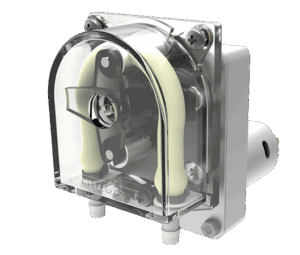
Microdos OEM peristaltic tube pumps are suitable for integration into dosing, distribution, vending, transfer, and bottle filling systems.
Max. Flow Rate : 1.4 ml/min – 2200 ml/min
Max. Pressure : 2 bar

In stock

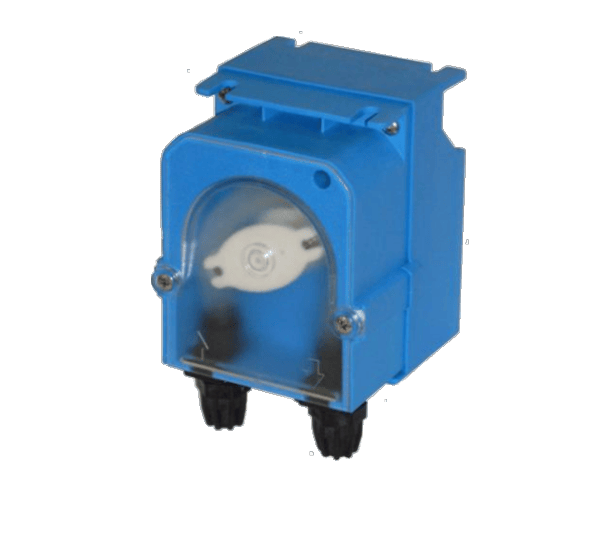
Microdos MP3 Series

Microdos MP peristaltic tube pumps are compact pumps ideal for precise dosing of chemicals.
Max. Flow Rate : 0.5 – 20 l/h
Max. Pressure : 1 bar / 3 bars

In stock

How Do Peristaltic Pumps Work?

Peristaltic pumps are a type of positive displacement pump used to pump a variety of fluids. The liquid is held within a flexible hose or tube fitted inside the pump casing.

The pumping principle, called peristalsis, is based on the alternating compression and relaxation of the hose or tube, which draws the contents into the pump and directs the product to the pump, conveying it to the discharge line.
A rotating shoe or roller moves along the hose or tube, creating a temporary seal between the suction and discharge sides of the pump. As the pump rotor rotates, this sealing point moves along the hose, pushing the product out of the pump into the discharge line. When the pressure is released, the hose or tube returns to its original shape, creating a vacuum and drawing fluid into the suction side of the pump. Thanks to this mechanism, the pump offers a powerful positive displacement action that provides self-priming.

  • Proportional Dosing
    The perfect seal between the two sides of the pump prevents liquid from flowing back. In addition, since the pump's speed-flow rate is linear, peristaltic pumps are ideal for dosing applications.
  • No Cross-Contamination
    The pumped liquid does not come into contact with any moving parts because it is completely contained within the reinforced hose or tube. This makes peristaltic pumps a hygienic pumping solution and the risk of contamination is eliminated. In addition, maintenance time is reduced because the only component that wears is the hose or tube.

Advantages of Peristaltic Pumps

Each peristaltic pump has a flexible hose or tube. Thanks to this:

✔ Creates an open flow path and exhibits high resistance to abrasion.
✔ Allows easy flow of solids, high density (S.G.) and viscous media.
✔ The flow rate is proportional to the speed, which is suitable for dosing.
✔ It has a wide range of uses, from laboratories to mining applications.
✔ The hose prevents cross-contamination and ensures a safe working environment.
✔ It does not contain a mechanical seal, thus reducing the need for maintenance. Safely contains liquid inside when the hose tears.

Features and Benefits of Peristaltic Pumps

✔ Mechanical seal-less (gasket-less) design
✔ Low maintenance cost
✔ Can run dry
✔ High suction capacity
✔ Wear-resistant
✔ Has solid handling capacity
✔ Can be operated in reverse
✔ No liquid slippage
✔ Provides precise dosing

Peristaltic Pump Types

Peristaltic pumps are divided into two main categories:

  • Hose Pumps: Suitable for liquids with high solids content.
  • Tube Pumps: Excellent for low flow requirements, has programmable features and offers multiple head options.

Where are Peristaltic Pumps Used?

Peristaltic pumps are used in many industries. Especially for:

  • In the mining industry, to pump high solids content slurry
  • In wastewater and biogas plants, for corrosive, viscous liquids
  • In chemical laboratories, for precise dosing and chemical transfer processes

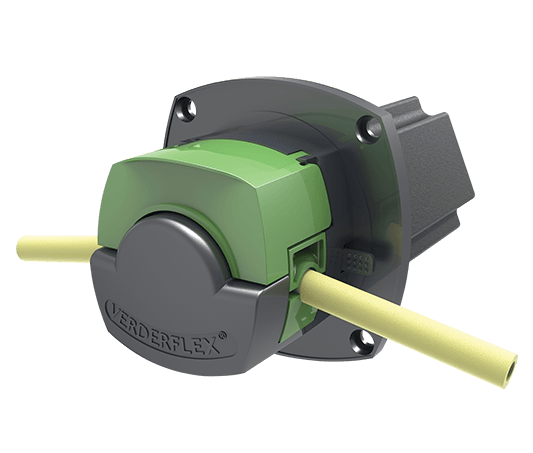
Verderflex Hose and Tube Pumps

Verderflex pumps offer powerful and durable pumping performance in the most demanding conditions.

  • Vantage 5000 models are tube pumps that can be easily programmed for chemicals and laboratory applications.
  • The industrial tube pump series is designed for use in hazardous areas.
  • These pumps can be operated independently or integrated into automation systems.
  • Hygienic options are also available for the food and beverage industry.

Verderflex Hose Pumps

  • Verderflex Dura and Verderflex VF are designed to reliably pump the most challenging fluids.
  • It has a wide range of uses, from the mining industry to water treatment plants.
  • It has developed the longest lasting hose on the market and is resistant to corrosive applications.
  • These hoses can also be used in many other peristaltic pump brands.
    VF and Dura series completely contain the liquid in the pump body thanks to leak-proof hose connections.
  • This protects operators and the environment.

Outstanding Features of Verderflex Hose Pumps

✔ Offers repeatable dosing with ±1% accuracy
✔ Does not slip (liquid leakage)
✔ Has 95% vacuum capacity or provides 9.5 meters (31 ft) suction power
✔ The largest peristaltic hose pump can pump 90 m³ (390 US gallons) per hour
✔ Can operate up to 16 bar (230 PSI) pressure

For more information or technical support about peristaltic pumps, you can contact us.