How Do Mixer Pumps (High Shear Pumps) Work?

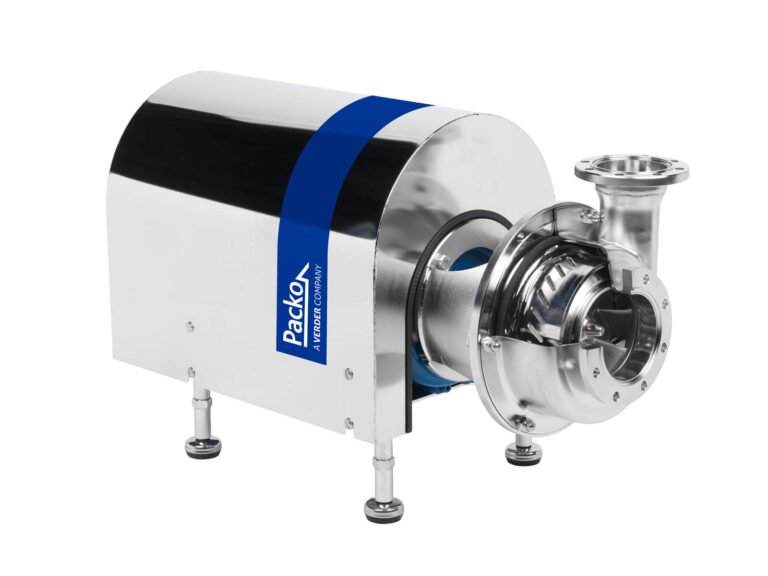
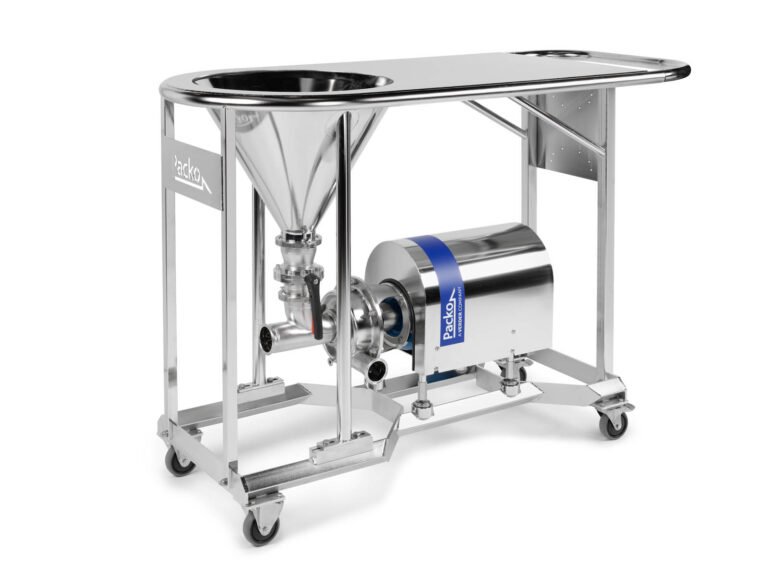
High shear pumps are specially designed pumps that mix fluids by applying high shear force, reduce particle size, and achieve a homogeneous mixture.

Combines both transfer and mixing/homogenization functions in the same body.

Why Use It?

These pumps offer the best performance especially in the following processes:

Process

Purpose

Emulsification

Permanently combining oil-water phases

Homogenization

Reducing particle size

Dispersion

Quickly dissolving powders in liquid

Deagglomeration

Preventing clumping

Mixing + Transfer in a single piece of equipment

Hygienic process with CIP/SIP

Operating Principle

The pump contains a rotor-stator structure:

  1. The pump draws product phases into the pump at high speed with the rotor.
  2. The rotor passes the liquid through the stator holes with a very high speed difference.
  3. During this transition:
    • Shear rate
    • Turbulence
    • Cavitation-controlled micro bubble breakage
      occurs
  4. This energy can break down particles to sub-micron levels.

Since the system is inline, continuous mixing is ensured → Batch tank is not required or greatly reduced.

Structural Features

  • The rotor generally rotates at 3000–15000 rpm.
  • There can be more than one stator stage (single, double or triple stage)
  • Hygienic design:
    • Stainless steel (AISI 316L)
    • Ra ≤ 0.8 µm surface roughness
    • EPDM / FKM / PTFE seals
  • CIP and SIP compatibility
  • Tri-clamp connections
  • Certifications such as EHEDG, 3-A

Usage Areas

Sector

Application Example

Food and beverage

Dairy products, yogurt, whey, mayonnaise, ice cream, chocolate

Pharmaceuticals and biotechnology

Creams, injectable solutions

Cosmetics

Lotion, shampoo, makeup products

Chemical

Paint, coating, detergent, silicone

These systems give the best results in viscous or multiphase mixtures.

Selection Criteria

  • Viscosity (single or two-phase)
  • Particle size target (e.g. <5 µm)
  • Product sensitivity (heat, shear resistance)
  • Flow & pressure requirement
  • Rotor-stator type and stages
  • Hygienic standard requirements

Advantage

Return

Homogeneous, stable product

No phase separation

Inline production instead of batch

Capacity & efficiency increase

Shorter process time

Energy & labor savings

CIP/SIP compatibility

Hygiene and ease of cleaning

Mixing and transfer combined

Lower equipment cost

Differences from Other Mixer Systems

System

Feature

Inline High Shear Pump

High shear force + continuous flow

Static mixer

Low energy, weak particle reduction

Tank type mixer

Larger volume, slower homogenization

Colloid mill

Powerful but generally batch and requires more maintenance

➡ High shear inline pumps are the most modern and hygienic solution.

You can contact us for more information or technical support about Mixer Pumps (High Shear Pumps).