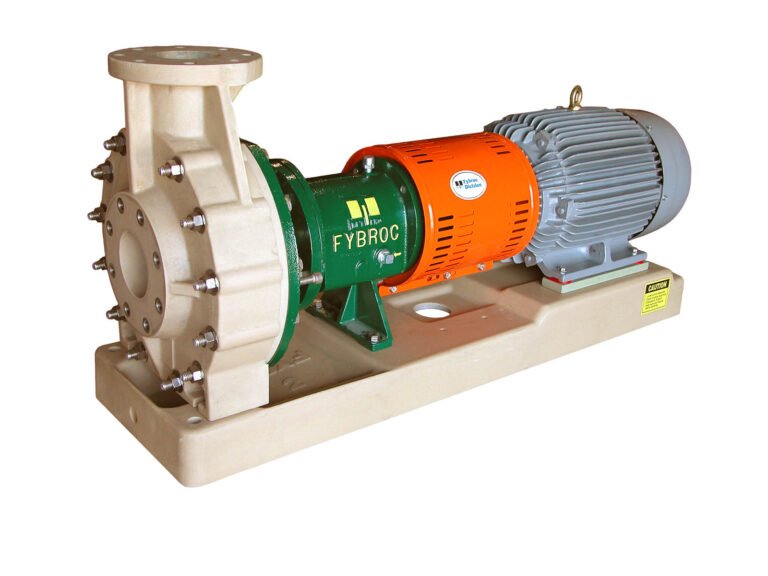
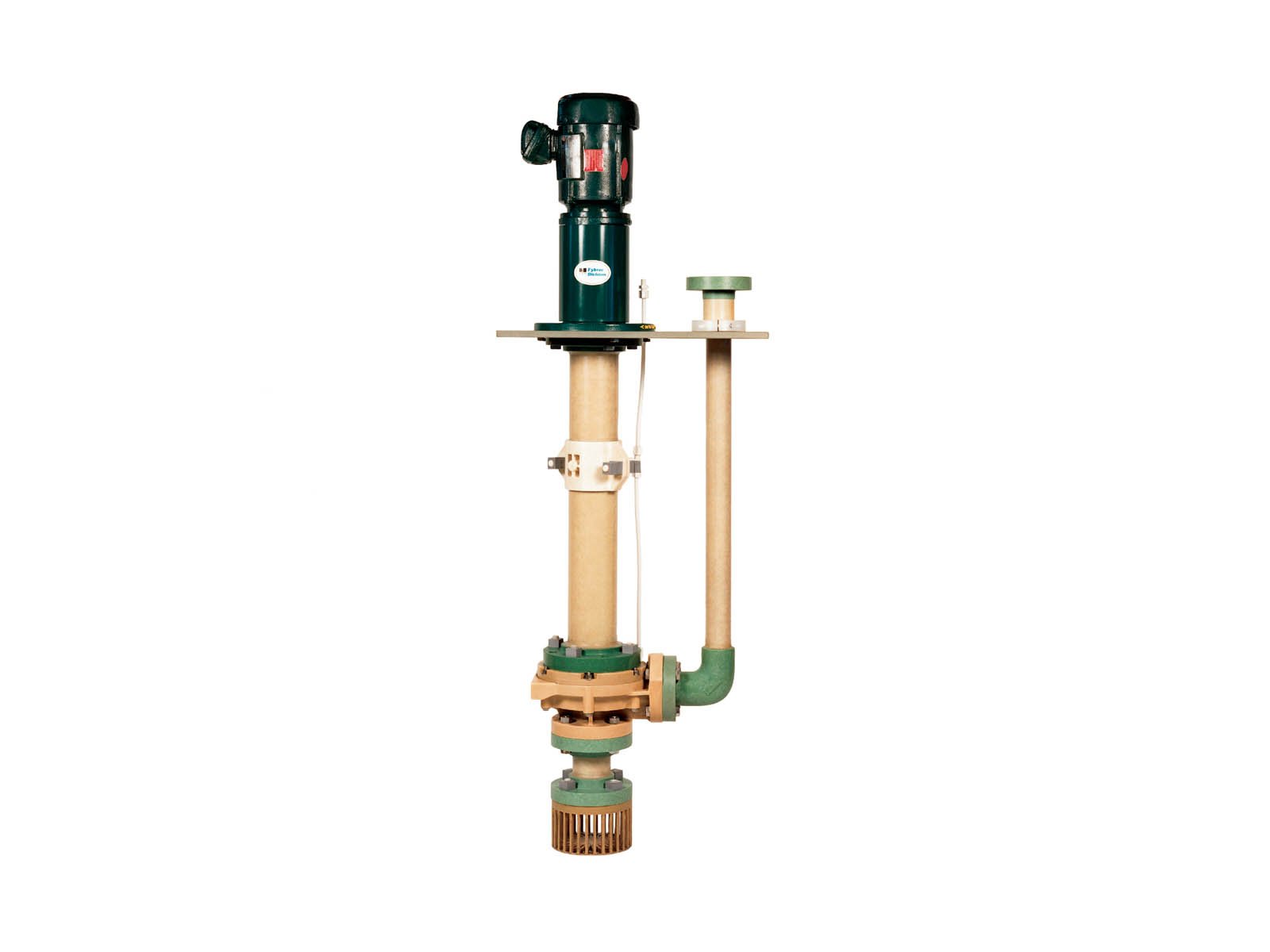
Plastic centrifugal pumps can be manufactured from materials such as PFA, PP (polypropylene), or PVDF (polyvinylidene fluoride) and can be used in a wide flow range from a few liters to thousands of cubic meters. While standard solutions are widely available for small volume pumps (up to 1 m³/h), manufacturers must meet special designs and extensive documentation requirements for large-scale industrial pumps.
For applications with very low flow rates or dosing systems, positive displacement pumps (e.g., diaphragm pumps) are the best solution. However, the most common solution that meets a wide flow range is centrifugal pumps. Although the design and operating principles are different, all components in contact with the medium are made of plastic.
Standards That Plastic Centrifugal Pumps Must Meet
Pumps used in industrial processes must comply with certain regulations and standards in terms of safety and performance. Companies that manufacture plastic centrifugal pumps are subject to the same safety rules as metal pumps. These rules are aimed both at preventing damage to the pumps and at preventing the leakage of environmentally harmful or toxic substances. The important regulations that must be followed are:
- EU Machinery Directive
- ATEX Directive (for explosive atmospheres)
- ISO 5199 (Design standards for industrial process pumps)
- ISO 2858 (Size and performance criteria for centrifugal pumps)
Safety Precautions for Plastic Pumps
A practical safety solution for plastic pumps is the magnet-coupled pump design. In this design:
✔ Internal components are made entirely of plastic or silicon carbide ceramic.
✔ The outer housing is made of cast iron, which provides pressure resistance and protects against external influences.
✔ Thanks to the magnetic coupling, it is completely isolated from the liquid medium and the risk of leakage to the environment is eliminated.
However, mechanical seal models are also sufficient for some applications. Both systems can be preferred according to the area of use.
As a result, plastic centrifugal pumps offer an excellent solution in applications requiring chemical resistance and are manufactured in accordance with safety standards.
Material Types for Plastic Pumps
Four main factors should be considered when selecting materials for plastic pumps:
- Chemical resistance
- Abrasion resistance
- Temperature resistance
- Material availability
The most durable plastics used for centrifugal pumps are thermoplastics such as UHMW-PE (ultra-high molecular weight polyethylene), PTFE (Teflon), ETFE (Tefzel), and PFA (perfluoroalkoxy polymer).
Like metal pumps, plastic pumps must be manufactured from materials compatible with the operating conditions and pump characteristics. However, economic factors should also be taken into account. For example, just as metal pumps do not always require expensive alloys (e.g., Hastelloy), plastic pumps do not always need to be made of high-cost PFA. Fiberglass or PVDF (polyvinylidene fluoride) materials are sufficient for many applications.
If the operating temperature, pump capacity, and pressure requirements are at appropriate levels, plastic pumps can offer corrosion-resistant solutions. They can transport a wide range of chemicals, from salt water to aggressive inorganic acids and basic liquids.
You can contact us for more information or technical support about plastic centrifugal pumps.