FYBROC

When corrosion resistance is required in demanding applications such as acids, salt water solutions, caustics, bleaches, solvents, and seawater, Fybroc is the solution you need.

As the company that developed the first fiberglass reinforced pump in 1966, Fybroc has focused on non-metallic pumps for over 50 years. Fybroc is a high-tech pump manufacturer specializing in reinforced composite centrifugal pumps designed specifically for corrosive liquids. It can handle a wide range of liquids, from thin, non-lubricating fluids to denser and more corrosive liquids. Our world-renowned resin transfer molding process offers a unique variety of resins to produce pumps with exceptional durability and corrosion resistance that can meet most of your process needs.

How Do Centrifugal Pumps Work?

Centrifugal pumps are pumps that operate based on the rotodynamic principle. Thanks to these features, they are an ideal choice for transporting dirty and corrosive liquids.

Fybroc 5500 Series

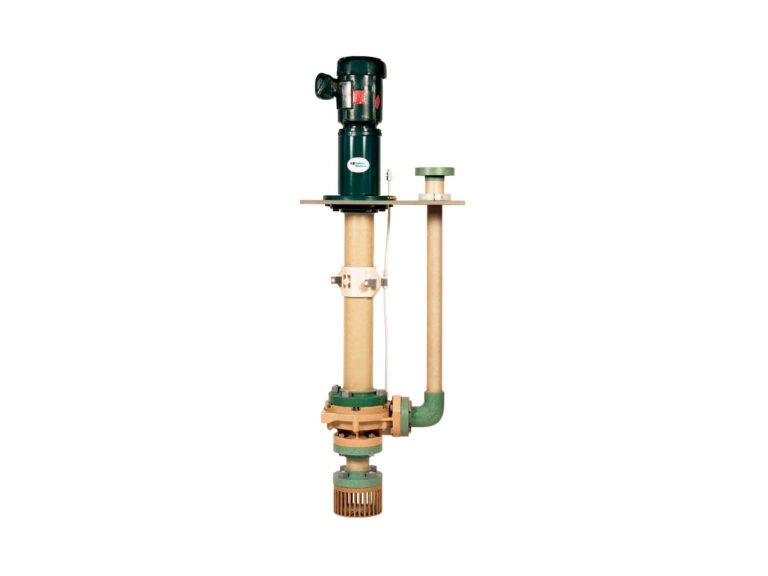
These are single-stage, semi-submersible fiberglass pumps made from thermoset material. There are no metal parts in contact with the liquid.
Max. Flow Rate : 1140 m³/h
Max. Pressure : 85 meters

In stock

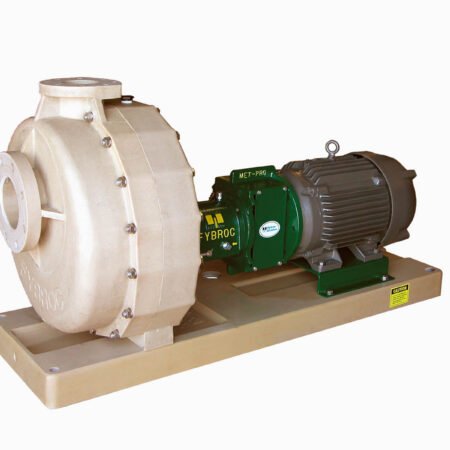
Fybroc 1600 Series

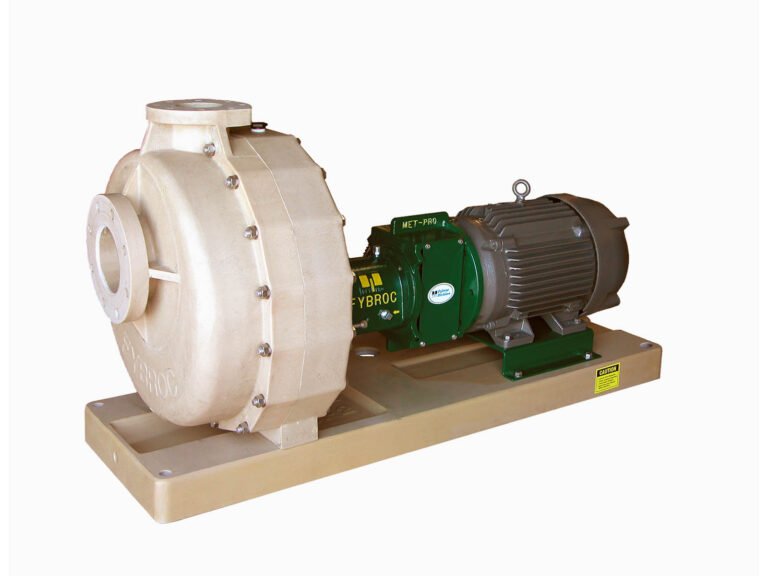
These are single-stage, self-priming fiberglass pumps made from thermoset material. There are no metal parts in contact with the liquid.
Max. Flow Rate : 320 m³/h
Max. Pressure : 55 meters

In stock

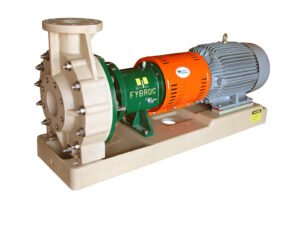
Fybroc 1500 Series

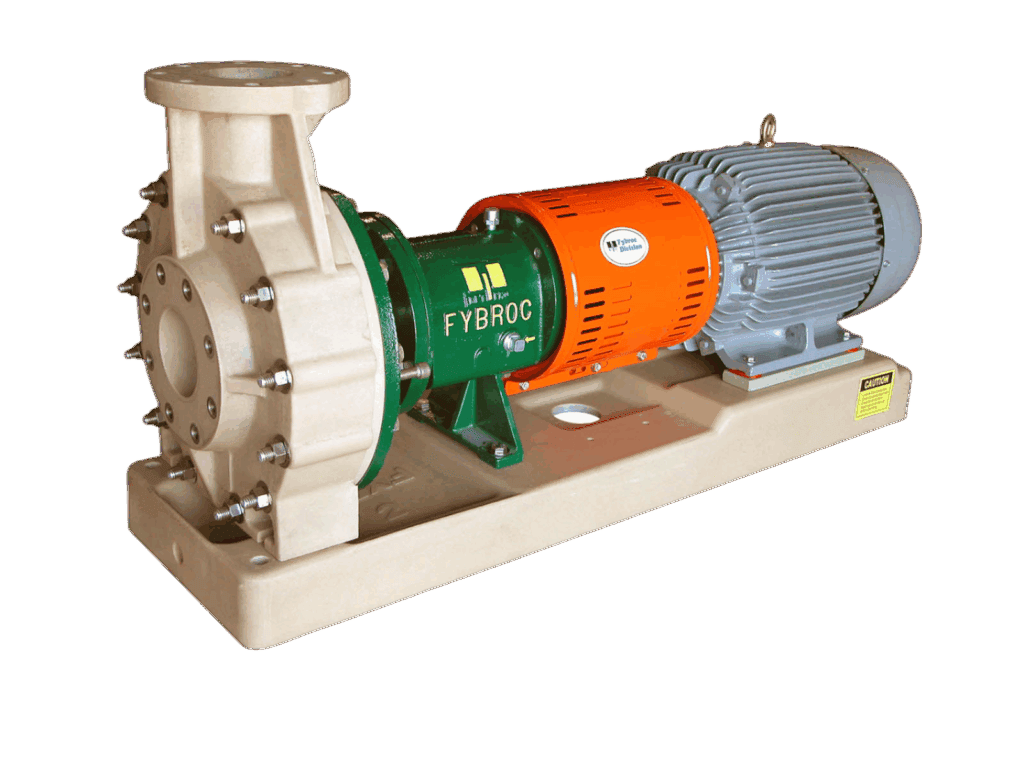
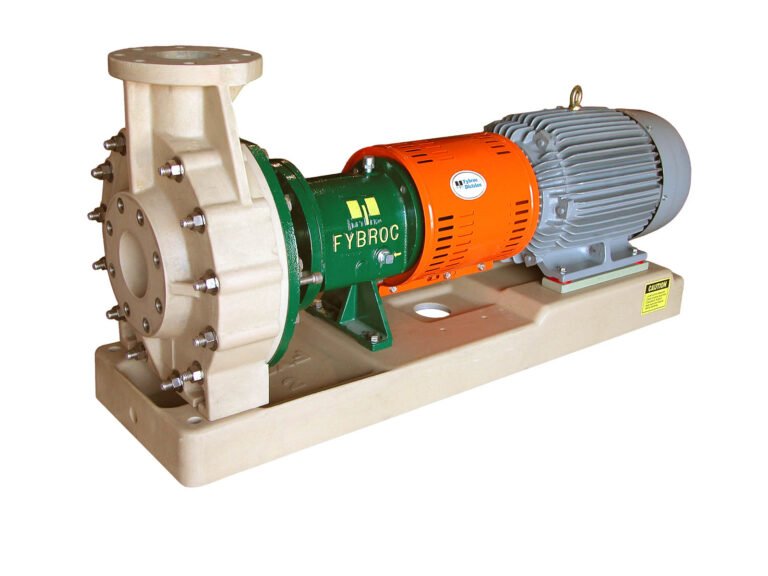
These are single-stage, end-suction, open-impeller fiberglass pumps made from thermoset material. There are no metal parts in contact with the liquid.
Max. Flow Rate : 1135 m³/h
Max. Pressure : 125 meters

In stock

Production of Fybroc Pumps

Fybroc® is a world leader in the design and manufacture of Fiberglass Reinforced Polymer (FRP) pumps. These pumps are available with different corrosion-resistant materials for pumping acids, salt water solutions, caustics, bleaches, solvents, seawater, and various waste liquids. Fiberglass centrifugal pumps provide excellent corrosion resistance without the need for expensive and variable exotic metals.

“Fiberglass Centrifugal Pumps for the Most Demanding Conditions”

Fybroc offers the widest range of FRP centrifugal pump sizes and types available, enabling it to handle the most challenging fluid handling applications. Fybroc pumps are among the most commonly used pumps in commercial aquariums, water treatment (municipal, desalination), wastewater treatment (municipal and industrial plants), and chemical plants.

Material Types

VR-1 (Vinyl Ester Resin)

Used in most corrosive applications; provides broad chemical resistance including acids, caustics, salt water, seawater, and wastewater.

VR-1 BPO-DMA (Vinyl Ester Resin with BPO-DMA Curing System)

Preferred for applications requiring specific corrosion resistance to bleaching chemicals such as sodium hypochlorite (NaOCl) and hydrogen peroxide (H₂O₂).

VR-1A (Abrasion Resistant Vinyl Ester Resin)

Used for the transfer of fluids containing low concentrations of abrasive particles such as fly ash, diatomaceous earth, or titanium dioxide.

VR-1V (Synthetic Veil Vinyl Ester Resin)

Provides additional protection in acidic flow applications where aggressive fluids such as hydrofluoric acid (HF) and fluorosilicic acid (H₂SiF₆) are present.

EY-2 (Epoxy Resin)

Offers high chemical resistance; it is an ideal option especially for aggressive chemicals, acids, and high-concentration sulfuric acid (up to approximately 98%) and solvents.

Operating Principle of Centrifugal Pump

A traditional centrifugal pump offers a highly efficient method for transporting low-viscosity liquids containing medium to small solid particles in large volumes. Models are also available that can handle more challenging liquids. Centrifugal pumps are pumps that operate based on the rotodynamic principle. Thanks to these features, they are an ideal choice for transporting dirty and corrosive liquids.

How Do Centrifugal Pumps Work?

Centrifugal pumps work by transmitting the rotational movement it receives from the motor to the impeller. When the impeller rotates, centrifugal force is applied to the liquid, and the liquid is taken from the suction line and transported to the discharge line at high speed. During this process, the impeller blades give kinetic energy to the liquid, and this energy is converted into pressure energy inside the pump body.

The flow inside the pump takes place in a continuously liquid-filled structure, and thanks to this, centrifugal pumps offer long-lasting uninterrupted operation performance in many processes.

Centrifugal pumps; It is used reliably in a wide range of applications, from chemical processes to water transfer, from heating-cooling circuits to tank emptying operations. Thanks to their energy efficiency, flow continuity, and design options that can adapt to different liquids, they are among the most frequently preferred pump types in the industry.

Centrifugal Pump Types

Centrifugal pumps are manufactured in many different types.

Some of them:

• End Suction centrifugal pumps
• In line Centrifugal
• Wet Rotor Centrifugal Pumps
• Multi-Stage Centrifugal Pumps
• Semi-Submersible and Submersible Pumps
• Self-Priming Centrifugal Pumps

Usage Areas of Centrifugal Pumps

Centrifugal pumps are versatile equipment that can adapt to different fluid types and process needs. It is one of the most preferred pump technologies in systems that require high flow rate, continuous flow, and energy efficiency.

Centrifugal pumps are widely used in the following applications:

* Water transfer and water distribution systems (clean water, process water, cooling water)
* Heating and cooling circuits (HVAC, district heating & cooling systems)
* Industrial process fluids (chemical, petrochemical, food, pharmaceutical, etc.)
* Urban and industrial wastewater transfer
* Tanker and storage tank filling/emptying operations
* Maritime applications (ballast, fire extinguishing, engine room circuits)
* Agriculture and irrigation systems
* Energy facilities and auxiliary operating systems

Depending on the application and fluid type; Optimum performance is ensured in every process with different body materials, impeller designs, and mounting configurations.

What Types of Liquids Can Centrifugal Pumps Transport?

Centrifugal pumps can handle many liquids with very different properties. However, since each liquid has its own unique properties, some pumps perform better for certain liquids than others.

For this reason, we recommend that you contact us for your specific liquid and the most suitable pump selection.