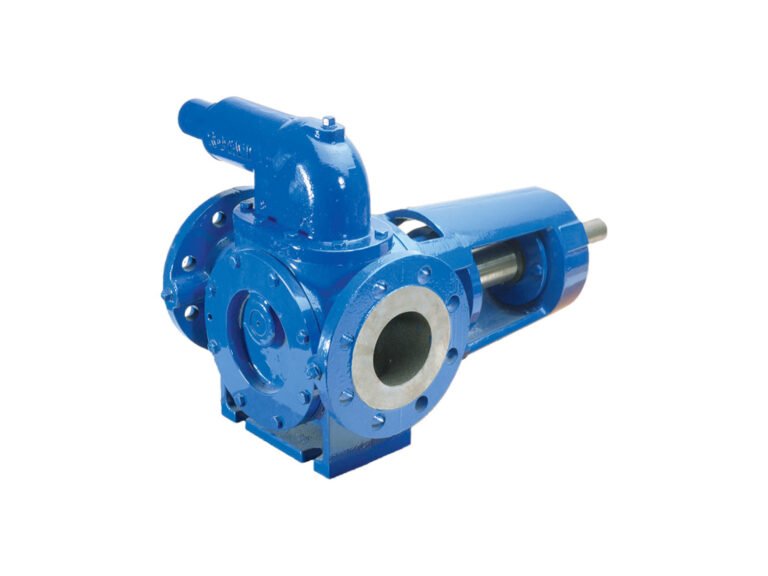
ROTAN

“For individual solutions”

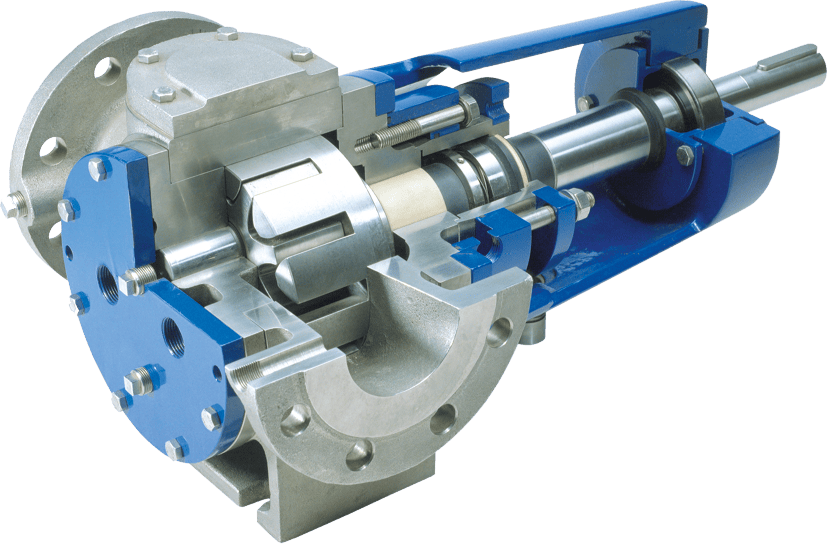
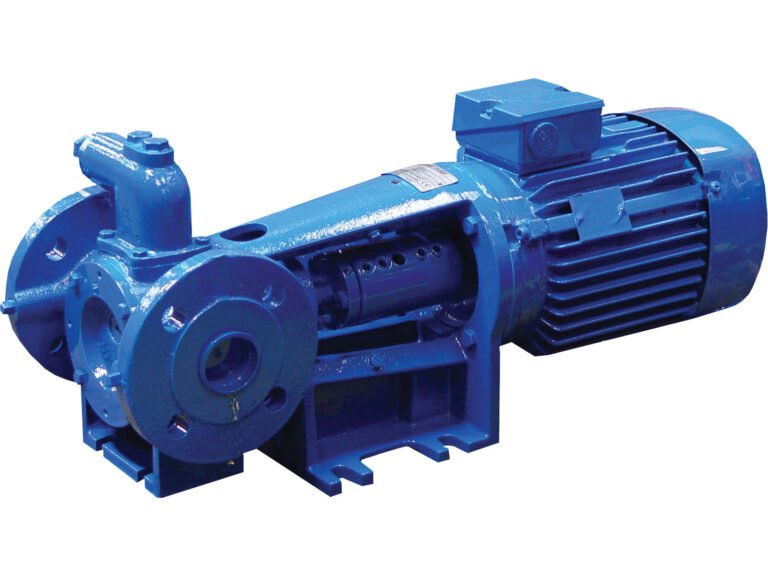
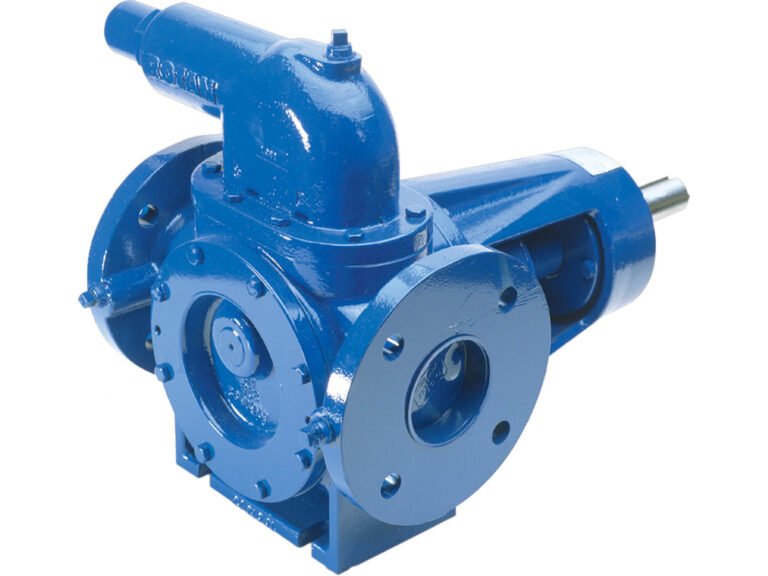
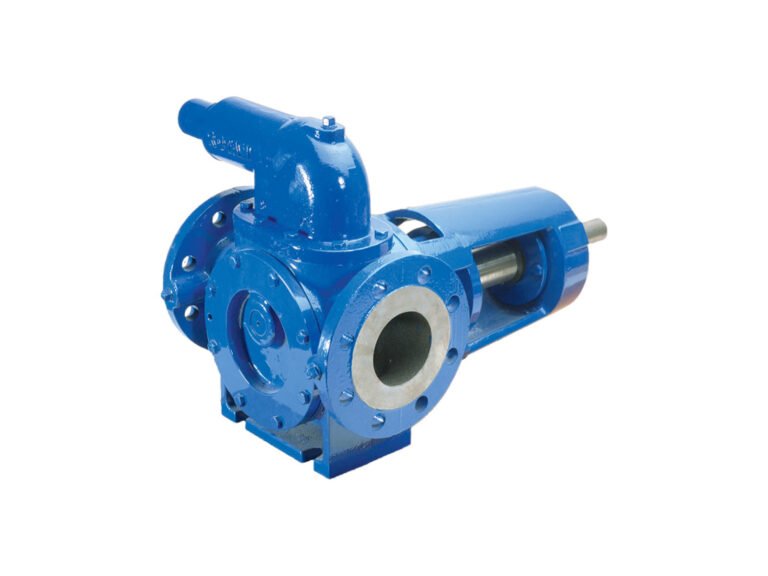
The ROTAN® internal gear pump ensures suitable flow conditions because the fluid flow direction is only slightly changed within the pump.

Ana Sayfa “For individual solutions” The ROTAN® internal gear pump ensures suitable flow conditions because the fluid flow direction is

The internal gear pump principle was developed in 1915 by a Danish-born American. In 1921, a Danish company was licensed to manufacture these pumps, and since then they have been continuously marketed worldwide under the ROTAN® brand.

The unique, modular concept of ROTAN® pumps is widely recognized today as the most advanced internal gear pump design available.

This ensures superior self-priming capability and precise fluid handling, while also making it possible to pump high-viscosity fluids.

How Do Internal Gear Pumps Work?

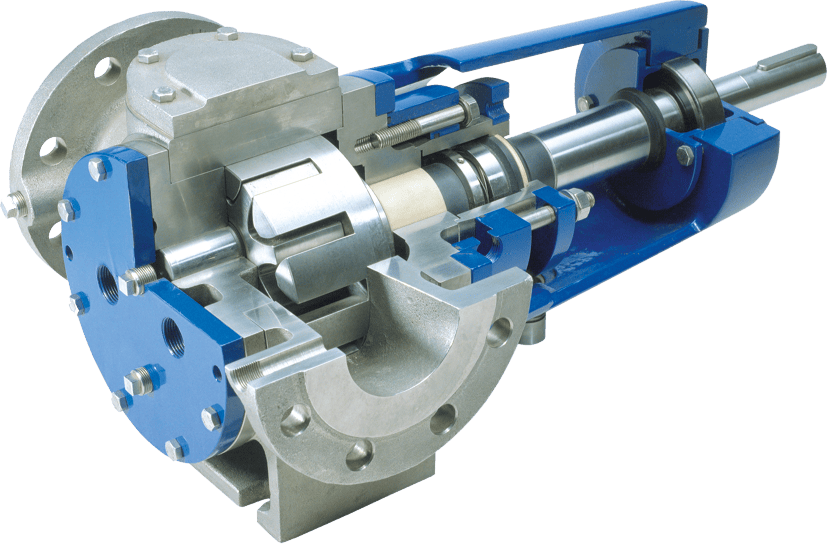
An internal gear pump is a type of positive displacement pump that uses a rotor and idler gear arrangement to create flow.

ROTAN® CD – Chemical Duty

CD pumps are primarily designed for conveying corrosive liquids found in the chemical processing, food, and pharmaceutical industries.
Max. Flow Rate : 170 m3/h
Max. Pressure : 16 bar

In stock

ROTAN® CHD (Chocolate Pump) Series Gear Pumps

Over 50 years of experience in the production of pumps for the chocolate industry, and close collaboration with leading plant manufacturers, has resulted in a unique pump design that meets the high mechanical and thermal requirements for precise chocolate processing.
Max. Flow Rate : 90 m3/h
Max. Pressure : 16 bar

In stock

ROTAN® ED (Magnetic Coupling) Series Gear Pumps

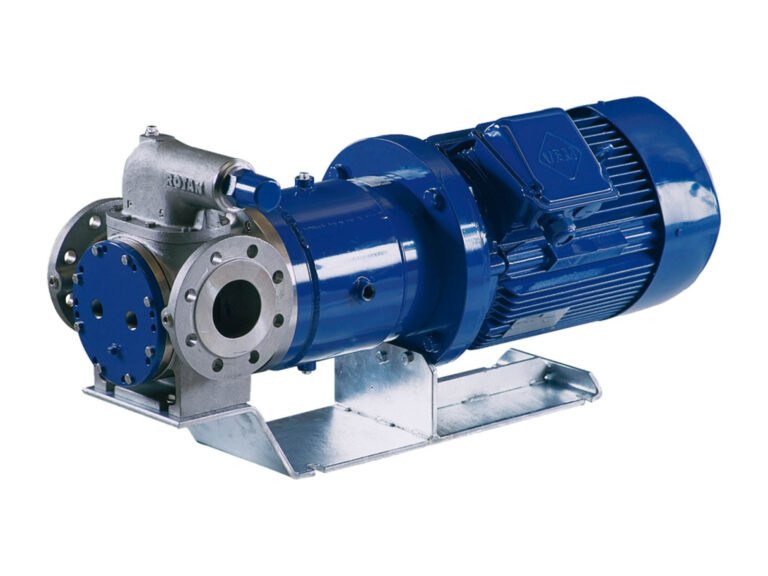
Because they require minimal maintenance, ED pumps offer a highly economical solution compared to conventional sealed pumps, especially in applications requiring double mechanical seals.
Max. Flow Rate : 90 m3/h
Max. Pressure : 16 bar

In stock

GP (General Applications) Series Gear Pumps

General purpose internal gear pumps made of cast iron, for clean and non-corrosive fluids. Thanks to its simple and compact design, it is a cost-effective pump and is often used by OEM customers in modified versions.
Max. Flow Rate : 50 m3/h
Max. Pressure : 16 bar

In stock

Rotan® HD (Heavy Duty) Series Gear Pumps

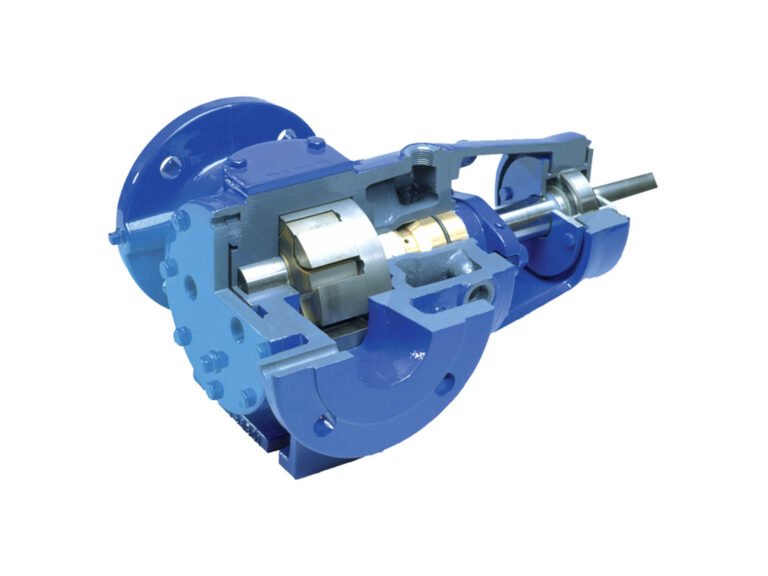
Heavy-duty cast iron internal gear pumps are designed for a wide range of viscosity, non-corrosive fluids.
Max. Flow Rate : 170 m3/h
Max. Pressure : 16 bar

In stock

Rotan® PD (API 674 Petrochemical) Series Gear Pumps

Petrochemical Task PD pumps are internal gear pumps designed for refinery and petrochemical applications, and all pressure-resistant components are manufactured from carbon steel. Design pressure is specified according to ANSI 300 lbs or PN40 standards.
Max. Flow Rate : 170 m3/h
Max. Pressure : 16 bar

In stock

How Do Internal Gear Pumps Work?

An internal gear pump is a type of positive displacement pump that uses a rotor and idler gear arrangement to create flow.

In this arrangement, a crescent-shaped divider is located next to the internal gear, and the entire system is housed within an external gear. As the rotor gear rotates the idler gear, the fluid is displaced and pushed toward the outlet flange due to the crescent offsetting the gears and the gear teeth meshing.

Where Are Internal Gear Pumps Used?

Internal gear pumps are particularly suitable for viscous fluids. They provide high-efficiency operation with dense fluids such as the following:

  • Oils, bitumen oils and solidifiable oils, syrups, chocolate and resins

The more viscous the product, the more efficient the displacement principle becomes. Internal rotary gear pumps can transport fluids up to 100,000 cSt viscosity!

Operating Principle of Internal Gear Pumps

Internal gear pumps operate on the positive displacement pump principle. The pump housing contains a double gear mechanism:

  • External rotor gear
  • Internal idler gear
  • A crescent-shaped divider

The operating stages are as follows:

  1. The rotor gear rotates and moves the idler gear.
  2. As the gears rotate, fluid is drawn between the gears.
  3. The crescent-shaped divider offsets the idler gear and provides a seal between the suction and discharge ports.
  4. The gears carry the fluid, pushing it to the discharge port.
  5. At the discharge port, the gears mesh, expelling the fluid and making the flow continuous.

This ensures a continuous and vibration-free flow.

Flow Path and Gear Mechanism

As shown in the diagram in the document, the flow is produced by two gears:

  • Rotor gear (1)
  • Idler gear (2)

The operating principle is as follows:

  • The rotor gear rotates the internal idler gear.
  • As the gears rotate, fluid is drawn into the gaps by the crescent (3).
  • The fluid is gently transported to the discharge port.
  • As the gear gaps close, the fluid is pushed out and pumped.

Result

  • Continuous and smooth flow
  • Vibration-free pumping
  • Low pressure variation

Advantages of Internal Gear Pumps

✔ Excellent flow provision capability for viscous fluids:

  • Can handle viscosity up to 100,000 cps.
  • Transports substances such as chocolate, oils, and resins smoothly.

✔ Vibration-free and continuous flow:

  • Continuous fluid flow is ensured thanks to the gear mechanism.
  • A flow directly proportional to the speed is obtained, regardless of pressure.

✔ Can transfer abrasive materials:

  • Can work with solid particles and abrasive materials.
  • Can transport shear-sensitive liquids without damage.

✔ More control and reliability:

  • The flow rate can be controlled independently of pressure.
  • Provides reliable and controlled pumping for sensitive fluids.