How Do Static and Dynamic Mixers Work?

Static and dynamic mixers are ideal for processing all types of liquids and gases, from low to high viscosity, with or without solids, and are available in many different metal and plastic configurations.

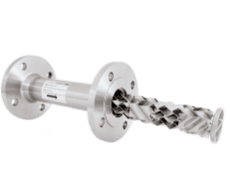
Different mixing elements, such as helical, V-shaped, and X-shaped, each have typical characteristics for mixing (or dispersing) liquids (and liquids with gases) in small or large volumes, from low to high viscosity, and with or without solids.

All our hygienic mixers are electro-polished as standard (other stainless steel options are also available), and the known advantages of this process include a hygienic and aseptic structure, a greatly increased cleanability, increased corrosion resistance, and high resistance to adhesion.

Static Mixers

The design of the Static Mixer is optimized to provide turbulent mixing forces and minimize friction and energy loss in the system.

The modular system developed to design a unique mixer makes the process completely custom, enables rapid production, and offers a long service life.

These features make our static mixers ideal for all "in-line" mixing applications.

Dynamic Mixers

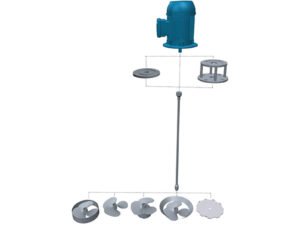
The Dynamic Mixer offers a highly efficient method for circulating or mixing all types of liquids, with low or high viscosity, with or without solids, for small or large tanks.

The drive and shaft system is extremely robust, offering stable and reliable operation. Axial and radial flow impellers are suitable for various mixing applications, including corrosive and/or abrasive liquids.

The materials of the wet parts are always selected according to the process requirements.

These features make dynamic mixers ideal for managing different applications in many industries, such as the food sector.