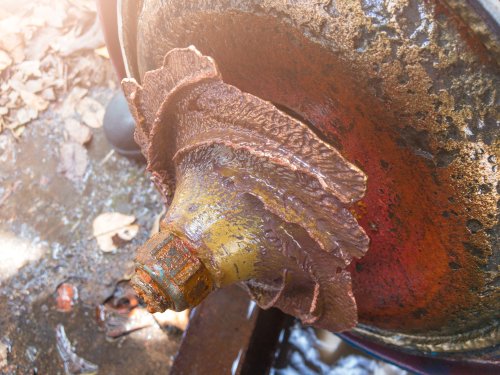
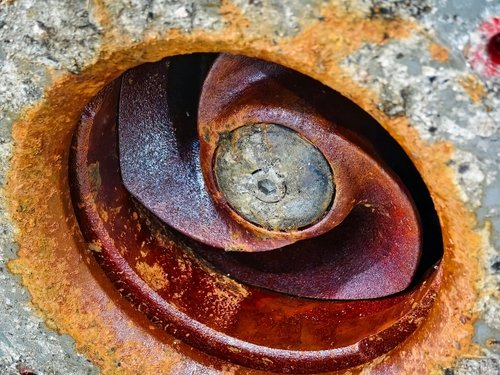
Types of Corrosion
The most common types of corrosion in pumps and process equipment are:
- General (uniform) corrosion: An equal amount of metal loss occurs across the entire surface.
- Pitting corrosion: Forms deep pits in small areas.
- Crevice corrosion: Develops locally in flange gaps or bolt areas.
- Galvanic corrosion: Occurs when different metals come into contact in the same environment.
- Stress corrosion: Cracking occurs due to the combination of mechanical stress and a corrosive environment.
- Erosion/cavitation corrosion: Deformation occurs on the metal surface due to the abrasive effect of the fluid.
Material Selection and Corrosion Resistance in Pumps
Choosing the right materials is one of the most critical factors determining the lifespan of pumps. Different fluids trigger different types of corrosion. Therefore, environmental conditions, temperature, pH, and ion content must be taken into account.
Seawater Applications
Seawater is a highly aggressive environment for standard 316 stainless steel due to its high salinity and chloride content.
- Spot corrosion may begin in 316 SS material within a few months.
- Duplex (1.4462) stainless steel has higher corrosion resistance and can be used in seawater for many years without problems.
- Bronze is an ideal material, especially for seawater pumps, due to its natural resistance to seawater.
- Fiberglass (glass fiber reinforced thermoset) material offers a service life of 10 years or more without material loss thanks to its non-metallic structure.
Chemical Environments
For pumps intended for use in acidic or basic environments, selecting stainless steel is critically important.
- 316L stainless steel: Provides adequate protection in weak acid and alkaline environments.
- 904L and Hastelloy series: Preferred for high temperatures and highly acidic environments (e.g., HCl, H₂SO₄).
- PTFE-coated or plastic-bodied pumps: Provide the highest chemical resistance in strong acids (e.g., chlorine, nitric acid, hypochlorite, FeCl3).
Corrosion Protection Methods
- Appropriate material selection
- Surface coatings (epoxy, rubber, PTFE, etc.)
- Cathodic protection systems
- Regular maintenance and cleaning
- Suitable operating temperature and flow rate control.